It happened sometime last week. I was sitting at my desk, pulling my initial Figma ideations, writing my component specs, and handing off functional Angular code directly to my developers using my AI agents.
And I realized: I was bored.
The absolute sci-fi magic of AI-assisted development has fully normalized into just being... my day job. The honeymoon is over, and now it’s just work. But hitting this plateau made me notice a massive, widening gap in my workflow: the divide between enterprise-funded AI and indie-bootstrapped AI.
The Luxury of Enterprise Smarts
At work, my toolset is a luxury vehicle. I use the Kiro IDE hooked up to Claude Opus 4.6. It is incredibly capable, and I don’t have to think about token limits or API costs.
More importantly, Kiro enforces "spec coding." It inherently understands that the human designer needs to be in the loop as the orchestrator. It forces me to define the architecture and the rules of engagement before it writes a line of code. It’s an opinionated, highly structured process that keeps the AI from losing the plot.
The Indie Slog & The $20 Ceiling
Then 5:00 PM hits. I swap over to my personal projects—ironing out bugs on my DIY Cardmaker app and building the complex data logic for PurrPlan (my multi-cat feeding schedule app).
Suddenly, I am in the indie trenches. For my personal life, I absolutely love Gemini for everything, so I happily pay the $20/month for a Google AI Pro subscription. Financially, adding another $20 or $30 a month on top of that just for Claude access on personal projects is a lot. I want to keep my AI budget capped.
So, inside my Antigravity IDE, I have to make that Google subscription work.
The "Sniper and Workhorse" Strategy (And the Friction)
To survive the indie budget right now without taking on another subscription, I’ve had to architect a manual workaround. I call it the "Sniper and the Workhorse":
The Sniper (Claude Opus): Through my current setup, I get a very tiny, rationed amount of access to Claude Opus. I save this strictly for the heavy lifting. I switch to Opus only when I hit a massive, complex architectural issue, have it generate the strict implementation plan, save that file, and immediately switch off.
The Workhorse (Gemini High): I switch back to Gemini High, which I have plenty of access to, to actually execute the code based on Claude's blueprint.
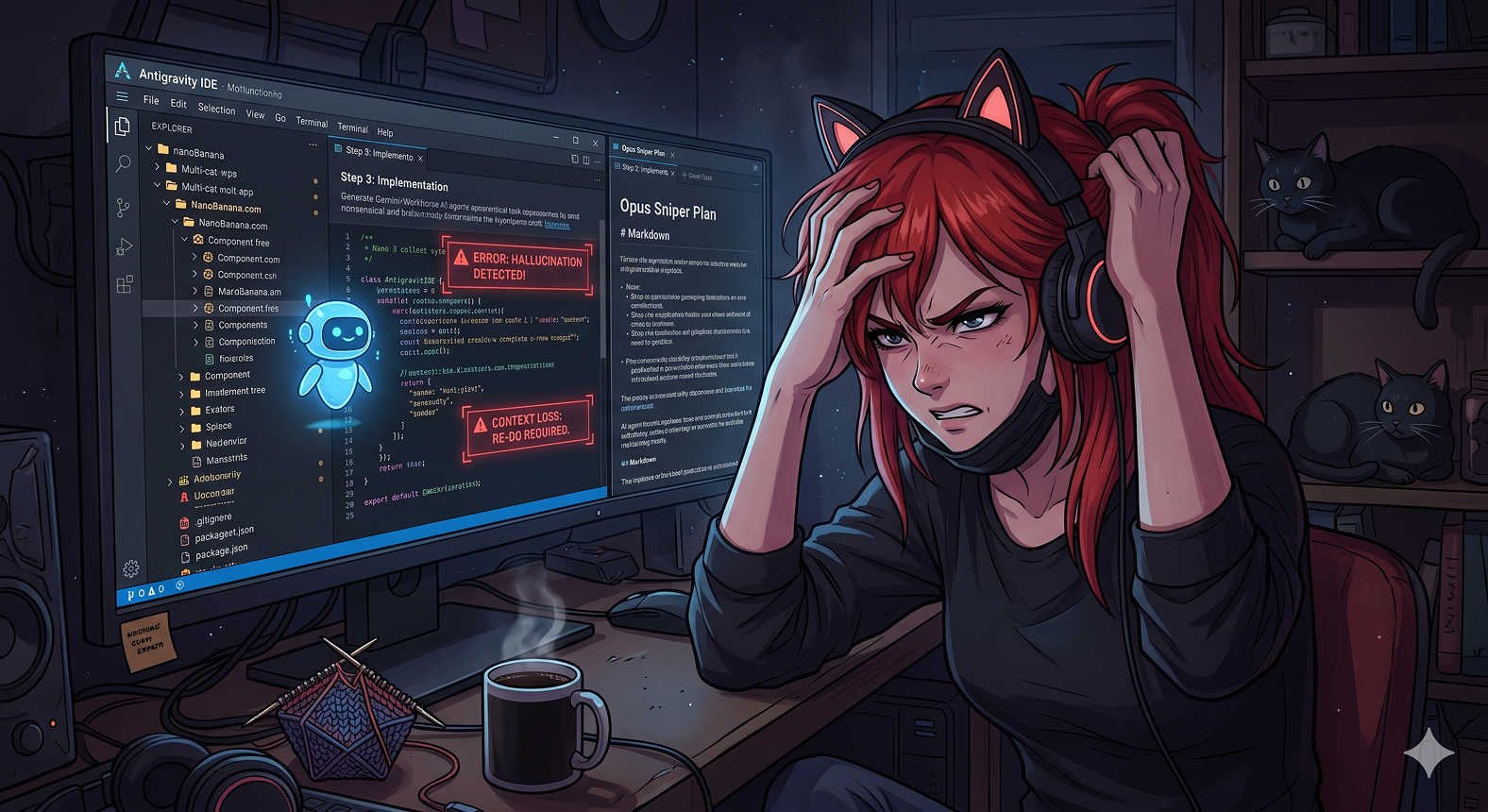
But here is where the honeymoon ends: the stupid and the mistakes are killing me.
Without an enterprise IDE like Kiro enforcing the guardrails, and relying on the Workhorse to interpret complex code, I spend so much time fixing hallucinations and passing context back and forth. I am so used to how incredibly smart Opus 4.6 is during my day job that dealing with the missteps at home feels like a massive slog. I am essentially acting as a manual project manager for an amnesiac developer.
The AI honeymoon might be over, and honestly, navigating these constraints is just a massive learning curve. I am definitely still stumbling through it and adjusting my setup daily. I don't have the perfect indie architecture figured out yet, but this is the workaround keeping my projects moving this week. We are all just figuring this out as we go.
#DesignEngineer #UXDesign #AI #WebDevelopment #Bootstrapping #Claude #Gemini #Frontend #KiroIDE