A two-week trip to Japan in May was exactly the reset I needed. It forced me away from the screen, got me out of my daily loops, and put my brain back into a state of "beginner's mind."
Which was fortunate, because returning to the desk in June was an absolute blur. We immediately dove into ADA remediations on our legacy code, followed by heavy migration work.
My workflow for this has actually gotten incredibly slick. I use Kiro connected to Claude for my front-end coding, which gives me massive amounts of heads-down time. But recently, I've noticed a troubling side effect to this newfound efficiency: the complete erosion of cognitive downtime.
In fact, it's so slick that I regularly juggle four Jira tickets at once. Not a brag—a concern. Currently, my active queue looks like this:
Running a small tweak to our component library.
Building a piece of the front-end in the sandbox harness.
Ideating new AI features in Figma for our core application.
Handling a migration ticket.
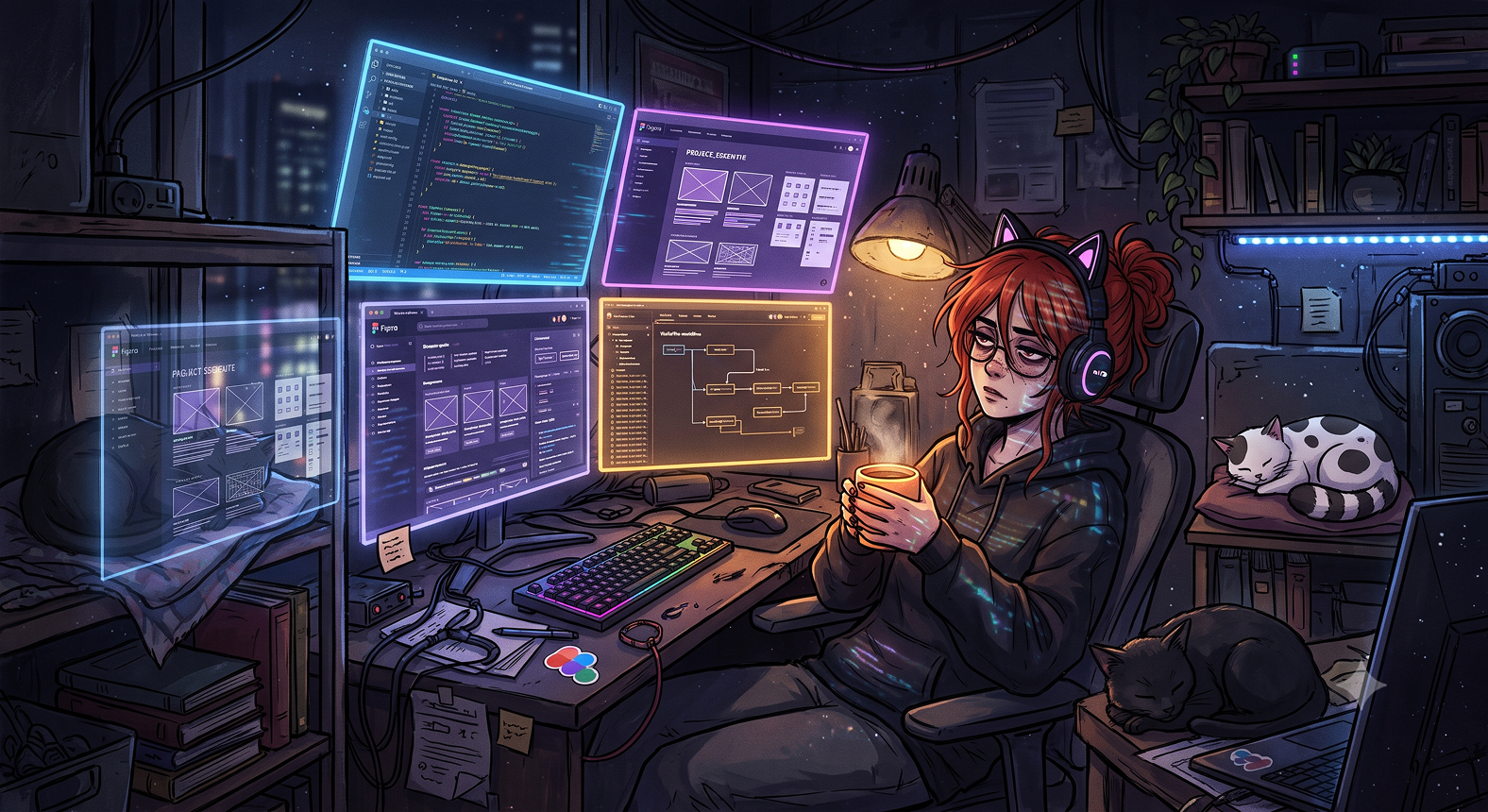
In the pre-AI days, writing the code for that migration ticket would take hours. Now, I spend a few minutes ideating the concept, I have Kiro write the spec, and then I tell it to execute.
Here is where the problem starts. I hand off the spec, and Kiro takes time to chug through the task and execute the code. In the past, that execution phase was just the physical act of typing. Now, it's an asynchronous window. Because I have a capable agent doing the typing, I feel this intense drive to stay highly productive. I might keep half an eye on its progress to ensure it doesn't go awry, but mostly, I immediately pivot my focus to the next ticket in the queue. The friction of coding has been removed, but so has the natural breathing room.
Occasionally, I hit a complex problem that requires me to stop and do a 40-minute deep dive just to ideate before transcribing directions for Claude. Lately, I've realized those 40 minutes of single-task focus feel like an absolute vacation compared to the frantic context switching required to keep my AI minions moving. But the rest of the time, jumping directly from one high-focus conceptual problem into another, over and over, takes a physical toll.
I am thrilled that I can keep the needle moving on four projects at once, which is fantastic for our roadmap, but I am mindful of the cognitive cost. To keep my adrenal system from burning out, I've had to proactively bookend my workdays. I now start the morning with meditation to set a grounded pace, and at 5:00 PM, I immediately disconnect and go outside to garden. Working with my hands in the dirt (usually supervised by my three cats: Pyro, Spy, and Spike) forces my brain to stop buzzing and return to reality.
We aren't talking enough about whether human nervous systems are actually built to sustain this kind of relentless, gapless productivity. We are all learning the boundaries of these tools in real-time.
#UXDesign #WorkLifeBalance #DesignEngineer #Frontend #AIWorkflow